

MILEA WINERY . Argalasti, South Pelion
I.
How we began
Milea Winery is a family-run business in the heart of the Pelion peninsula, near the village of Argalasti.
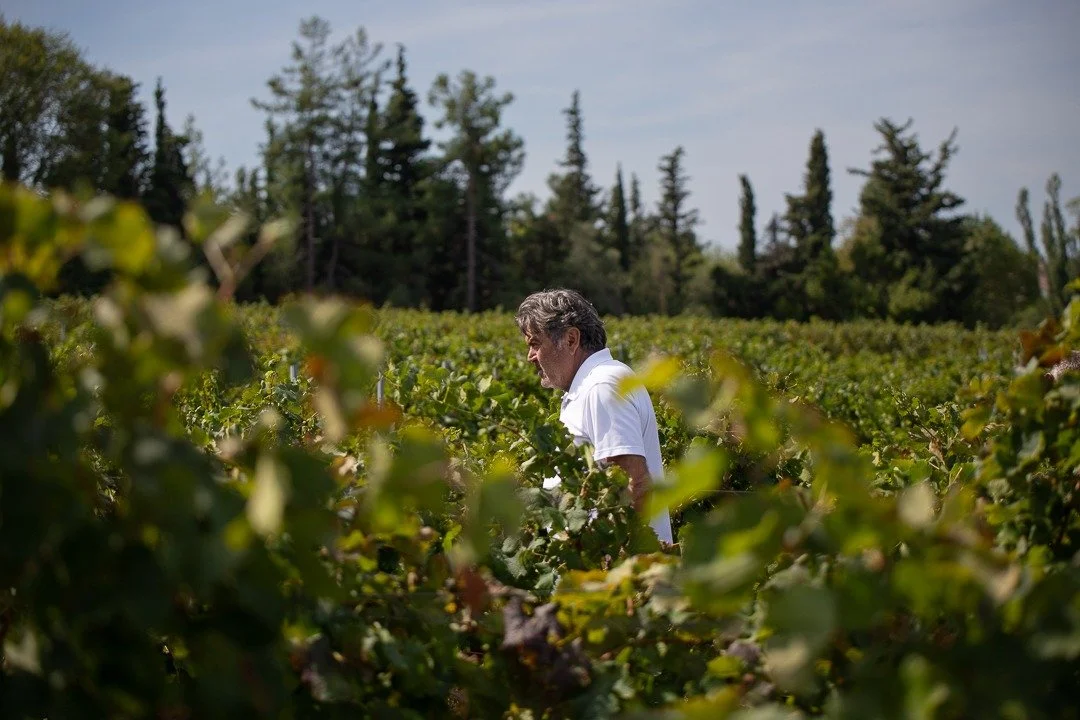
Its story begins with the decision of Lazaros Karipidis to create a winery in a part of Greece that was, until then, unknown for its viticulture. Guided by his earlier experience in Vounaina (Ktima Karipidi), together with his wife, Susannah, and their love for Pelion, they settled in the Milea area of Argalasti. On this small slope, surrounded by a large forest area and a small stream, they found the ideal ecosystem to host their venture. They cleared the land in the summer of 2007, preserving the cypress trees around the property that later became the inspiration for the winery logo.
With faith in organic farming and respect for the microcosm around them, they densely planted 6,000 vines per hectare with noble varieties and created a winery that can handle the grapes gently and express the full potential of the place in the bottle.
II.
The second generation
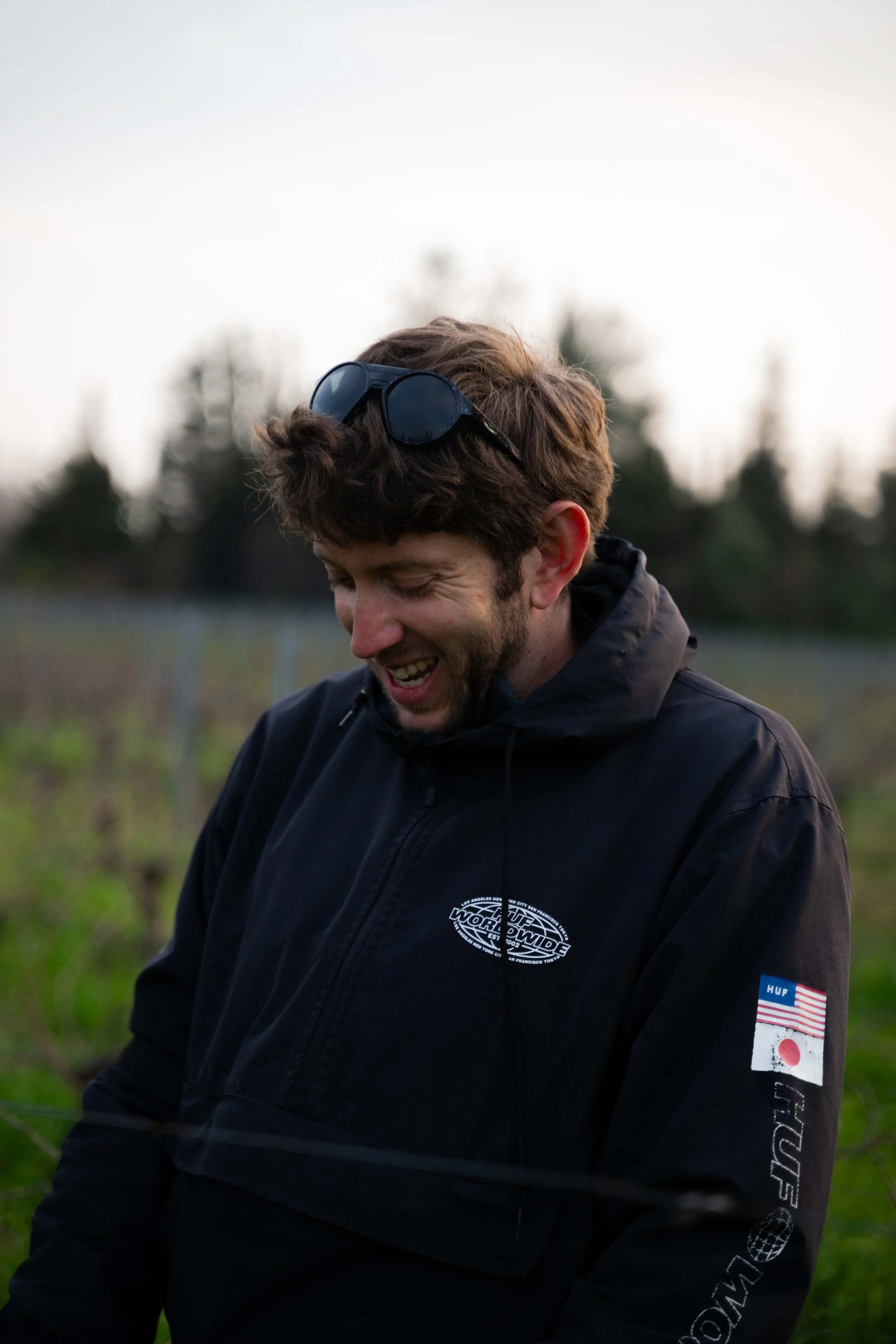
With the natural flow of time, the care of the winery passed to the second generation, James and Theo Karipidis.
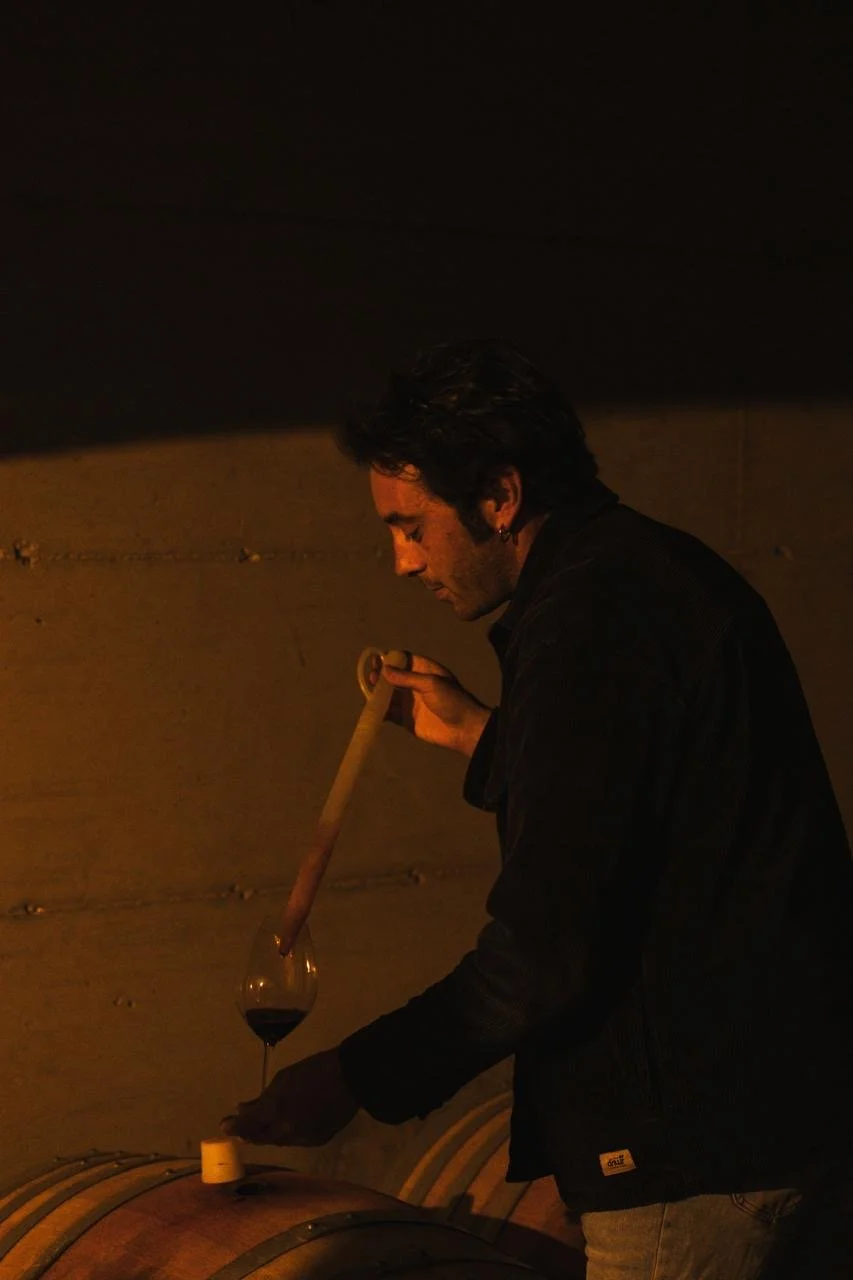
Knowing the work from a very young age, we like to take a hands on approach at every stage: from winter pruning and the harvest to vinification, ageing and bottling.
This close, daily attention turned the original single vineyard of 2 hectares into three separate vineyards, with a total area of 5.5 hectares. We planted our first Greek variety, Asyrtiko, and returned to an old family vineyard in Vounaina.
In the winery, we don’t believe in recipes or repetition. Just as each harvest season shows different characteristics, we let every vintage tell its own story.
Our harmonious coexistence with our environment constantly teaches us new ways to care for our vineyards: enriching the soil with organic matter (compost) and applying farming practices that respect the ecosystem and its microorganisms, giving back to the land as much as possible.