

III.
Our vineyards
5.5 HECTARES · 3 SOIL TYPES · 2 GENERATIONS
We believe the old saying that wine is made in the vineyard and consider ourselves farmers and grape growers first. All our vineyards are organically farmed.
With a hands on approach in the vineyard, we tend to our vines personally and do our best to produce fruit that embody the perfect balance between taste and character.
With a deep-rooted dedication to our craft, we oversee every stage of growth, ensuring the utmost care for our vines while safeguarding and enhancing the natural environment surrounding us.
Each vineyard is a new chapter of our story, always evolving.
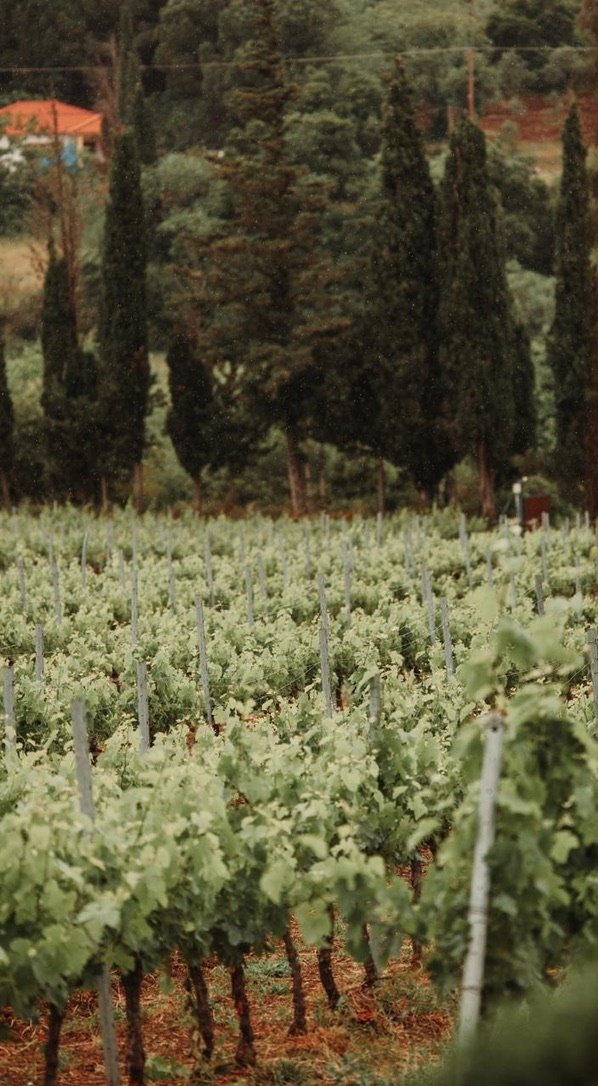
MILEA / ARGALASTI (2008) · 300 METRES · CLAY
The home of the winery, at 300 metres altitude. Clay soil full of organic matter, a large forest all around and a stream at its foot that gives us cool nights in the summer months, preserving the natural acidity of the grapes and prolonging their ripening on the vines. A dry-farmed vineyard with dense planting of Chardonnay, Merlot and Pinot Noir.
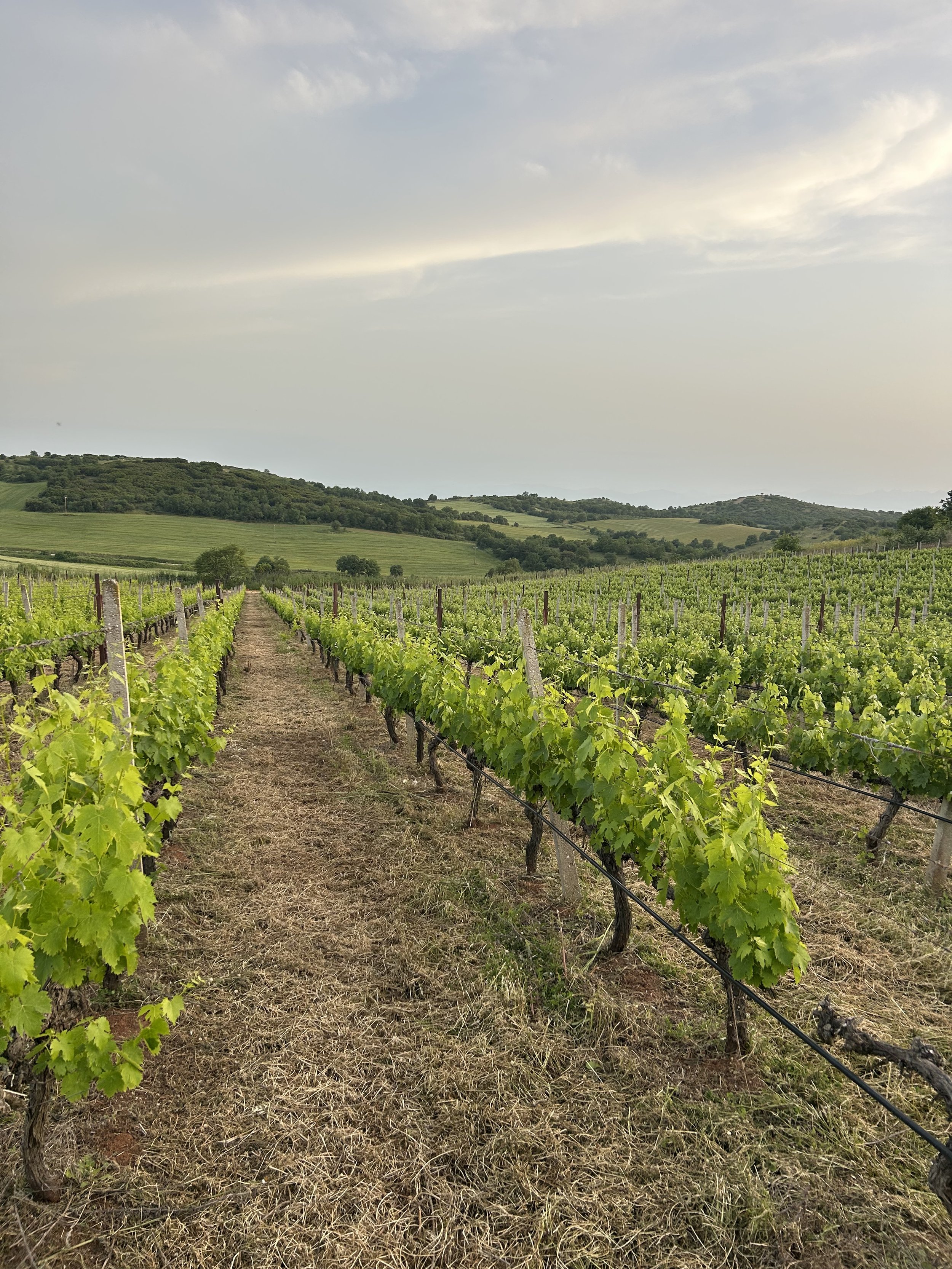
16ARIA / VOUNAINA (1996) · 280 METRES · SANDY
Vounaina is a village situated among rolling hills between two great plains of Thessaly; it is a protected NATURA area and a stopover for migratory birds. In the 16aria area, at one of the highest points of the village, constantly crossed by air currents, we farm an old vineyard with sandy soil. Its south-east exposure, together with a neighbouring hill, gives natural shade, protecting the grapes from the afternoon summer sun while preserving their acidity. Here we grow the red varieties Sangiovese, Primitivo, Syrah and Merlot.
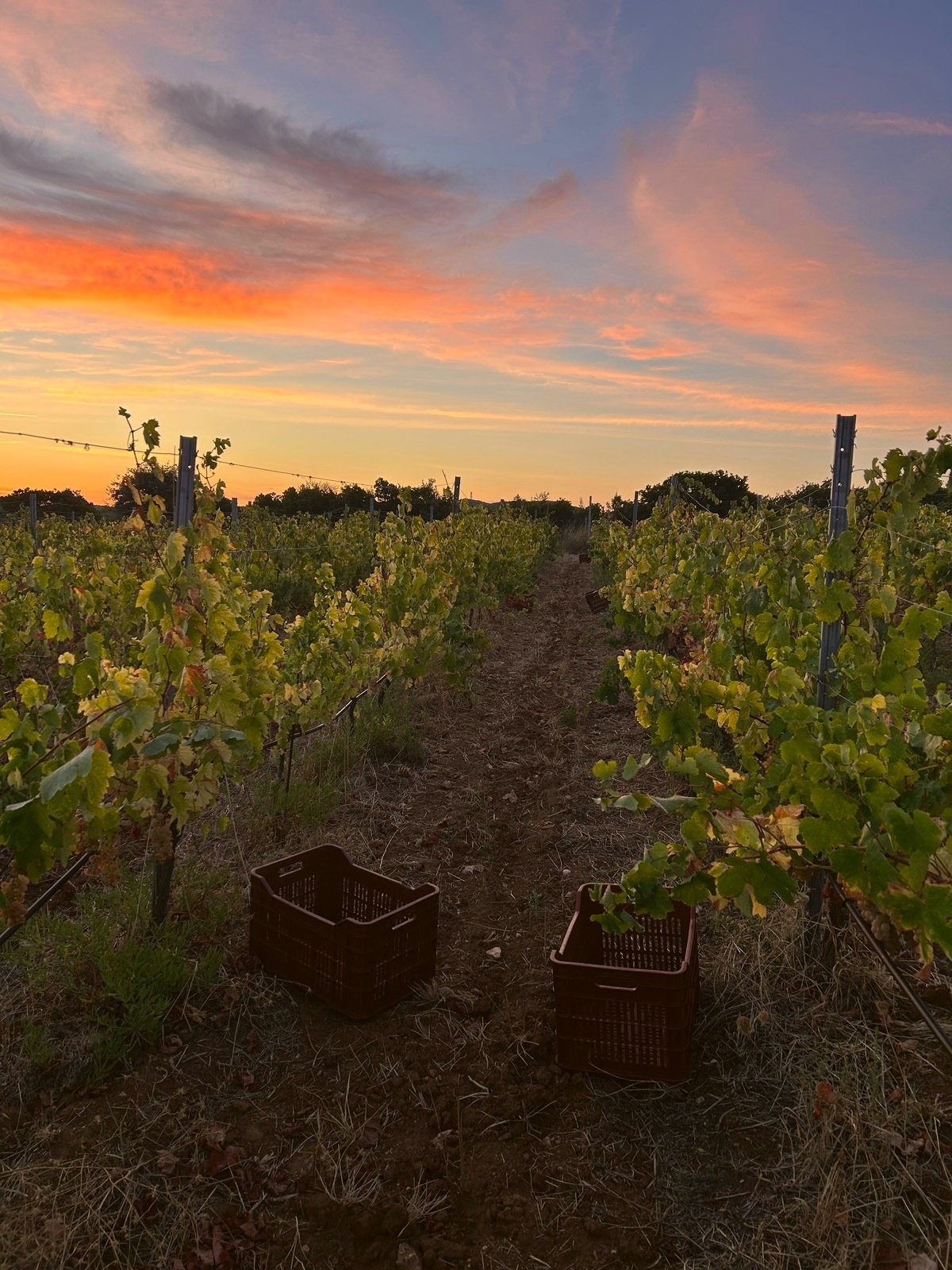
STRIVO / ARGALASTI (2018) · 300 METRES · LOAM
A dry-farmed vineyard at an altitude of 300 metres with loam soil, south-east exposure to the sun and constant sea breezes from the Aegean and the Pagasetic Gulf: an ideal environment for Asyrtiko.